South Korea
Researched with Zephyrus care
Zephyrus creator Theodora researches each destination personally, combining practical planning with carefully selected, reliable sources rather than a one-size-fits-all template. This guide gives you a strong starting point — and your own Zephyrus itinerary can go much further, tailored to your dates, pace, interests, budget and travel style.
Palaces, Pop Culture & Everyday Korea
SEOUL • JEONJU • GYEONGJU • BUSAN
A journey through a country where dynasties, design, ritual, speed and reinvention
exist side by side.
A ZEPHYRUS SAMPLE JOURNEY • 14 DAYS INCLUDING TRAVEL
The interesting part is not choosing between old Korea and new Korea. It is seeing
how closely they live together.
A palace gate can open onto a skyline of glass towers. A hanok alley can sit minutes from one of the most
technologically connected urban environments in the world. Traditional markets, Buddhist heritage, beauty
culture, cinema, K-pop, cafés, mountain paths and late-night food all belong to the same country — and the
itinerary works best when none of them is treated as a novelty.
This journey begins in Seoul, slows down in Jeonju, goes deeper into the Silla story in Gyeongju, then changes
energy completely on the coast in Busan before returning to Seoul for the final chapter.
WHY THIS JOURNEY WORKS
It moves through different versions of Korea
Seoul gives you scale and contrast. Jeonju gives you texture and everyday tradition. Gyeongju explains a
much older Korea that the capital alone cannot show. Busan changes the pace with markets, hills and the
sea. Returning to Seoul at the end makes the city feel different — because by then, you understand more of
what you are looking at.
ZEPHYRUS NOTE
Do not reduce Korea to a trend
K-pop, K-drama and beauty culture matter because they are part of contemporary Korean soft power and
everyday life. But the country becomes far more interesting when those stories sit beside Joseon palaces,
Confucian social traditions, Buddhism, regional food and the long history that came before the global
Korean Wave.
Contrast image — hanok detail + contemporary Seoul streetscape
THE ZEPHYRUS ROUTE
A 14-day journey that uses movement to reveal contrast rather than simply collect
cities.
| Day | Base / area | Main experience |
|---|---|---|
| 1–5 | SEOUL | Palaces • hanok • markets • design • contemporary culture |
| 5 | OPTIONAL DMZ | A separate historical and political layer — only if access and tour conditions allow |
| 6 | JEONJU | Hanok • food • a slower rhythm |
| 7–8 | GYEONGJU | Silla history • royal tombs • Buddhist heritage |
| 9–11 | BUSAN | Coast • markets • neighbourhoods • city life |
| 12–13 | SEOUL | Return with context • final neighbourhoods • flexible time |
| 14 | DEPARTURE | Seoul → Europe |
PACE RULE
The route is intentionally not Seoul + Busan only
Jeonju and Gyeongju are what stop this from becoming a city-break sequence. They create the historical
and cultural bridge between the capital and the coast.
Recommended total: 14 days including long-haul travel. The city-to-city sequence is more important than the
exact number of nights; tailor it around flight times and traveller pace.
DAYS 1–3
SEOUL — FIRST IMPRESSIONS & HISTORIC LAYERS
Arrive, recover from the long journey, then begin with the parts of Seoul that make its
contrasts easiest to read.
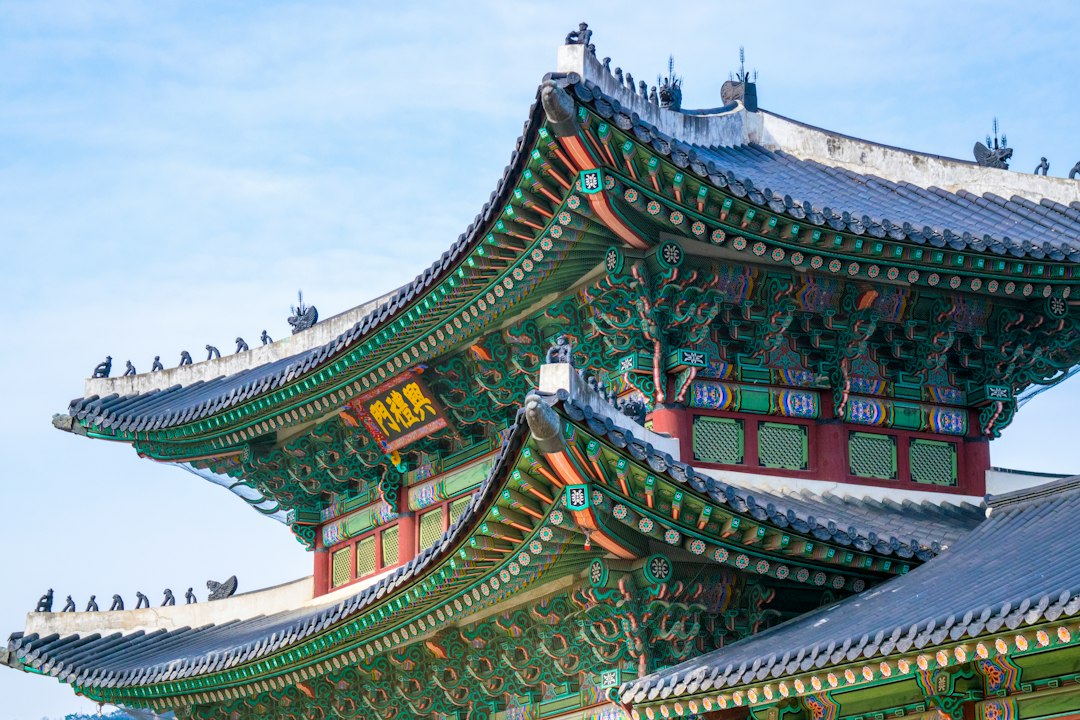
Gyeongbokgung / palace gate with mountain or city context
THE STORY BEHIND THE PLACE
Seoul is not a city that replaced its past
The capital was shaped by Joseon royal power, occupation, war, reconstruction and extraordinary
economic growth. The result is not a neat separation between “historic” and “modern” districts. The
interesting experience is noticing how frequently they overlap.
Build the first full day around a palace area, traditional streets and a market rather than trying to cross the
entire city. Gyeongbokgung or Changdeokgung works best when paired with nearby neighbourhoods rather
than with attractions on the opposite side of Seoul.
Spend time in a hanok area such as Bukchon or Ikseon-dong, but treat Bukchon as what it is: a living residential
neighbourhood, not an outdoor set. Keep noise low, respect access restrictions and avoid turning private
homes into photo props.
ZEPHYRUS NOTE
The palace is only half the experience
The architecture matters, but so does understanding what the palace represented: hierarchy, ritual,
governance and the spatial logic of Joseon society. A little context makes the courtyards and gates feel
completely different.
DAYS 4–5
SEOUL — THE KOREA THE WORLD RECOGNISES
Now change the lens: design, technology, contemporary culture, beauty, nightlife and
the Korean Wave.
Night Seoul — neon, café street, river or contemporary architecture
This is where the itinerary can become personal. One traveller may want music-industry landmarks, another
Korean cinema, another fashion and skincare, another contemporary art and architecture. The goal is not to
create a checklist of “K-culture” spots. It is to build one coherent day around the traveller’s actual interests.
DON’T JUST SEE IT
Notice how Seoul uses neighbourhood identity
The city is huge, but its character often becomes legible at neighbourhood level. Spend longer in fewer
areas. The difference between a palace district, a student neighbourhood, a design zone and a nightlife
district is part of the experience.
OPTIONAL CHAPTER
DMZ — only if it adds meaning to your trip
A DMZ visit can add an important historical and geopolitical layer, but it should remain optional. Access,
routes and tour conditions can change, so it belongs in the plan as a flexible element rather than as a fixed
promise.
DAY 6
JEONJU — SLOW DOWN
Leave Seoul and deliberately change rhythm.
Jeonju works because it is not another mega-city. The move here creates space for hanok architecture, regional
food and a more compact experience. Stay close enough to walk rather than turning the stop into another
transport exercise.
ZEPHYRUS NOTE
Come for the hanok. Stay for the food.
Jeonju is strongly associated with Korean culinary culture, and that is exactly why the meal should be part
of the itinerary design rather than an afterthought squeezed between sights.
PACE RULE
One good afternoon and evening can say more than ten rushed stops
The value of Jeonju is atmosphere. Leave room for tea, dinner, a slow walk and the simple experience of
being somewhere that moves differently from Seoul.
DAYS 7–8
GYEONGJU — BEFORE SEOUL
This is the chapter that changes the historical scale of the journey.
Gyeongju was the capital of Silla for centuries, and the city is still read through royal tombs, Buddhist sites,
archaeology and surviving cultural landscapes. Do not treat it as a one-day transfer stop between Seoul and
Busan.
THE STORY BEHIND THE DESTINATION
Korea did not begin with Joseon
Travellers often meet Korean history through Seoul’s palaces. Gyeongju opens a much earlier chapter: the
Silla kingdom, Buddhist art, royal burial culture and a political centre that shaped the peninsula long before
modern Seoul existed.
Give the city two nights if possible. Pair the central historic areas and tombs with a second day for Bulguksa /
Seokguram or another deeper heritage route, depending on pace and season.
ZEPHYRUS NOTE
Gyeongju is a city to read, not just photograph
The low mounds, stone remains and temple complexes are visually quieter than a palace façade. Context
matters more here. This is one of those destinations where understanding a little first changes everything
you see.
DAYS 9–11
BUSAN — KOREA FACING THE SEA
Three days, because Busan deserves to be more than Haeundae and a quick train
back to Seoul.
Busan changes the physical feeling of the trip: hills, sea, ports, markets, beaches and neighbourhoods that
climb into the landscape. Build the stay around different sides of the city rather than repeating the waterfront
each day.
WORTH THE DETOUR
Markets belong in the story
A market visit works best when it is connected to Busan’s identity as a port city and to what people actually
eat, buy and move through — not simply as a place to photograph unusual food.
DON’T JUST SEE IT
Look up — and look back at the city
Busan is shaped by elevation. Some of the strongest views come from understanding the relationship
between hills, dense housing, ports and the coast rather than standing only on a beach promenade.
Use one day for the coast and a temple or scenic route, one for markets and older neighbourhoods, and one for
a slower urban day — cafés, beach, museum, spa or simply time with no checklist.
DAYS 12–14
RETURN TO SEOUL — SEE IT DIFFERENTLY
The return is deliberate. The city feels different after Jeonju, Gyeongju and Busan.
Use the final nights for the parts of Seoul that did not fit naturally at the beginning: a neighbourhood tied to
personal interests, shopping, contemporary culture, a final market, a favourite café or simply a flexible buffer
before the long-haul flight.
ZEPHYRUS NOTE
Do not make the final day a punishment
Avoid filling the last hours with attractions just because they are “still missing.” A final meal, walk and one
well-chosen area usually creates a better ending than another cross-city sprint.
WHY THE RETURN WORKS
Context changes the city
At the start, Seoul can feel like a spectacular collision of palaces, towers, crowds and signs. On the return,
after seeing regional Korea and older historical layers, many of those contrasts begin to make more sense.
Day 14: departure to Europe, with airport timing planned around the actual flight rather than forcing a final
sightseeing block.
BEFORE YOU GO
A few rules that make the route better.
PRACTICAL NOTE
Base the plan on neighbourhoods, not just landmarks
In Seoul and Busan, travel time can be significant even when two places look close on a map. Group each
day geographically. It makes the trip feel calmer and creates more time for spontaneous stops.
RESPECT MATTERS
Hanok districts are not theme parks
Some traditional neighbourhoods are also residential areas. Follow local access rules, keep noise down and
treat doors, courtyards and homes as private unless clearly open to visitors.
TRANSPORT LOGIC
Use rail between the major city stops
For this route, the value is in moving city-to-city efficiently and then exploring locally. Avoid adding a rental
car unless a personalised version includes rural or nature-heavy extensions where it clearly improves the
trip.
SEASONAL FLEXIBILITY
Build the final version around the month
Heat, humidity, monsoon periods, cherry blossom season, autumn colour and winter temperatures can
significantly change how the same route should be paced. The destination file shows the logic; the
personalised itinerary adapts it.
THE ZEPHYRUS DIFFERENCE
This is a Sample Journey.
It shows the route, pace and travel logic we believe make South Korea work as a first deeper journey — not just
a list of famous places.
A personalised Zephyrus itinerary goes further. It is designed around your dates, travellers, budget and
interests, and can include:
• specific hotel and neighbourhood suggestions
• rail and local transport planning
• realistic daily timings and geographic grouping
• food and market recommendations
• K-pop / cinema / design / beauty experiences matched to actual interests
• family-specific or slower-pace alternatives
• seasonal changes and weather-aware options
• bookable experiences, reservations and practical travel notes
MAKE THIS JOURNEY YOURS
South Korea — Palaces, Pop Culture & Everyday Korea
Want this route redesigned around your own dates, interests and pace? Plan your South Korea journey
with Zephyrus Travel Design.
Travel deeper. Travel better.